News
Harmonizing Safe Abortion Legislation to Protect Women: Why the DRC Can No Longer Wait?
RJ
By Repro Justice Congo
30 Sept 2026•8 min read
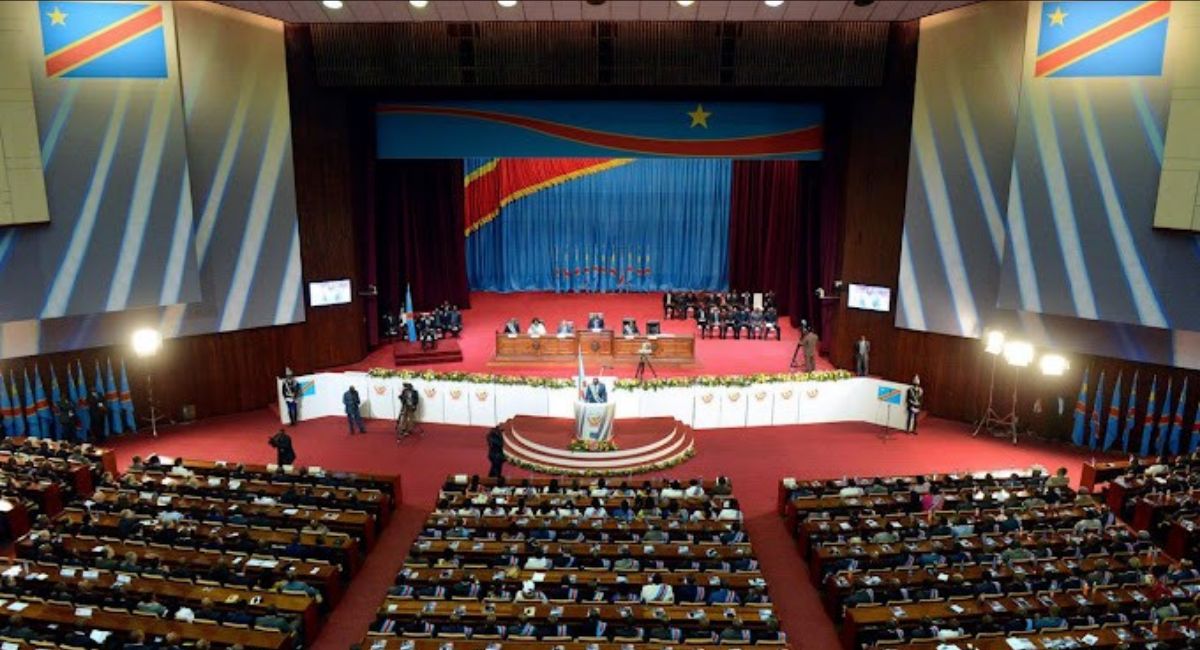
In the Democratic Republic of the Congo, a woman who has been raped may be entitled, under a treaty ratified and published by the State, to a medically assisted abortion — yet risk five to ten years of imprisonment for the very same act. As a proposed harmonization law is already dividing the National Assembly, Repro Justice Congo believes that this contradiction is no longer tenable and calls on Members of Parliament to seize this opportunity.
The Congolese Paradox
In the DRC, one question comes up repeatedly in health facilities: “Does the law allow me to do this?” The honest answer today is: it depends on which legal text one consults.
The DRC is not a country without a legal framework on reproductive health. It acceded to the Maputo Protocol through Law No. 06/015 of 12 June 2006 and published the Protocol in the Official Gazette on 14 March 2018. The Constitution provides that duly published treaties have authority superior to that of domestic laws. In 2020, the Ministry of Health adopted clinical standards aligned with the Protocol. Yet the 1940 Penal Code continues to criminalize abortion without exception.
The problem, therefore, is not the absence of law. It is the contradiction within the law. And this contradiction costs lives.
A Debate Finally Opened in Parliament
This contradiction is no longer merely a matter for lawyers: it is now before elected representatives. On 21 September 2026, a proposed law on the “harmonization, regulation and protection of access to medically assisted termination of pregnancy” was received by the Office of the President of the National Assembly. Introduced by National Deputy Pacquis Nganini Atabakutuba, the proposal seeks to bring criminal law and health regulations into conformity with Article 14 of the Maputo Protocol.
The proposal has not yet passed through the National Assembly’s Bureau of Studies, yet it has already generated strong opposition. One Member of Parliament, describing himself as a “conscientious objector,” has called for the initiative to be blocked, is considering a petition and has even raised the possibility of a referendum. His principal argument is constitutional: in his view, Article 16 of the Constitution, which proclaims the sacred character of the human person, would preclude any legalization of abortion. The author of the proposal responds that his bill “does not establish a general and unlimited right to abortion,” that it is limited to the circumstances provided for under Article 14(2)(c) of the Protocol, and recalls that Article 215 of the same Constitution gives duly published treaties precedence over domestic laws.
At the heart of the controversy lies a question that Parliament will have to address: is the Maputo Protocol, duly ratified and published, compatible with the right to life guaranteed by the Constitution? Repro Justice Congo’s position is that it is — and that this debate represents a historic opportunity to end decades of legal inconsistency.
A Right Recognized, A Right Punished
Five legal and regulatory instruments, adopted at different times, currently govern abortion in the DRC. Read together, they do not say the same thing.
The first is the Maputo Protocol. Article 14(2)(c) requires States to authorize medical abortion in cases of sexual assault, rape and incest, and where the continued pregnancy endangers the mental or physical health or the life of the woman. The DRC acceded to the Protocol through Law No. 06/015 of 12 June 2006 and published it in the Official Gazette on 14 March 2018.
The second is the Decree of 30 January 1940 establishing the Congolese Penal Code, which says the opposite. Articles 165 and 166 provide for five to fifteen years of imprisonment for anyone who performs an abortion on a woman, and five to ten years for the woman herself, without providing any exception.
The third, Law No. 18/035 of 13 December 2018 establishing the fundamental principles governing the organization of public health, falls somewhere between the two: Articles 85 and 86 permit abortion only to save the woman’s life or in cases of fetal malformation incompatible with life.
The fourth, Ordinance No. 70-158 of 30 April 1970 establishing the rules of medical ethics, permits therapeutic abortion only to save the woman’s life, requires the approval of two additional physicians, and bases medical care for minors on the consent of a legal representative.
The fifth consists of the Standards and Guidelines for Comprehensive Woman-Centred Abortion Care, adopted by the Ministry of Health in 2020. These organize abortion services according to the grounds established by the Maputo Protocol — while still requiring an adult to sign the consent form for adolescents.
The conclusion is unavoidable: the Penal Code, on which criminal prosecutions are based, recognizes none of the grounds that the Maputo Protocol requires States to authorize. The Public Health Law, although adopted nine months after publication of the Protocol, incorporates only one of those grounds. And the Code of Medical Ethics, now 56 years old, predates the Convention on the Rights of the Child, the Maputo Protocol, the 2006 Constitution and Law No. 09/001 on Child Protection.
Admittedly, Circular No. 04/SPCSM/CFLS/EER/2018 of 6 April 2018 issued by the Superior Council of the Judiciary instructed courts to directly apply Article 14 of the Protocol. But a circular does not amend criminal law. It remains poorly known among judicial police officers and does not protect a doctor or midwife who fears prosecution.
The Cost of Legal Inconsistency
The figures illustrate the urgency. The DRC records approximately 427 maternal deaths per 100,000 live births, one of the highest maternal mortality ratios in the world. In Kinshasa alone, an estimated 146,700 abortions occurred in 2016, most of them clandestine, while 37,900 women received treatment for complications — 93% of them in private or NGO-run facilities. In eastern DRC, UNFPA recorded more than 80,000 cases of rape between January and September 2025. Nationwide, one in five adolescent girls aged 15 to 19 has already experienced pregnancy.
The World Health Organization has consistently emphasized that restricting access to abortion does not reduce the number of abortions; it increases the proportion that are unsafe. The inconsistency in Congolese law therefore protects no one. It shifts care from health facilities into clandestine settings.
For women and girls, this means refusals of care, delays and documentary requirements that turn a recognized entitlement into an obstacle course. Survivors of rape, displaced women and those living in poverty — who often cannot access private health facilities — bear the greatest burden.
For adolescents, the consequences are even more severe. The Standards and Guidelines require an adult to sign the consent form on their behalf. Yet for a survivor of incest, the supposedly “trusted” adult may be the perpetrator of the abuse. For a displaced girl, such an adult may simply not be available. The requirement therefore excludes from care some of the very adolescents it purports to protect, even though Law No. 09/001 of 10 January 2009 on Child Protection makes the best interests of the child a primary consideration and recognizes the voice of a child capable of forming and expressing their own views.
For healthcare providers, legal inconsistency creates fear. A doctor who terminates a pregnancy resulting from rape may be acting in accordance with the Maputo Protocol and Ministry of Health standards, while still fearing prosecution under Article 165 of the Penal Code. Many therefore choose to refuse care.
For the justice system and the State, this inconsistency creates arbitrariness: the outcome of a case may depend more on the court before which it is brought than on a coherent body of law. It also exposes the DRC, in its reporting to the African Commission, to a persistent gap between its international commitments and its domestic legal framework.
Other African Countries Have Taken Steps to Resolve Similar Contradictions
The DRC would not be charting an entirely new path. Several African countries have addressed similar inconsistencies between their international commitments and domestic criminal law.
Ethiopia revised its Penal Code in 2005 to include rape, incest and minority among the legal grounds for abortion, and subsequently adopted clinical guidelines allowing a woman’s statement to serve as sufficient evidence in cases of rape. The proportion of abortions performed in health facilities increased from 27% in 2008 to 53% in 2014.
Benin, a Francophone country with a comparable legal tradition, harmonized its framework through health legislation. Law No. 2021-12 of 20 December 2021 expanded access to abortion through a relatively short and clear legislative amendment.
South Africa, through the Choice on Termination of Pregnancy Act of 1996, addressed abortion primarily as a healthcare matter and established access for adolescents based on their own consent. Healthcare providers are expected to advise minors to consult a parent, guardian, family member or friend, but the termination cannot be denied solely because they choose not to do so.
Mozambique reformed its Penal Code in 2014 and subsequently developed its legal and regulatory framework. Its experience also demonstrates that legislation alone is insufficient: without financing, public information and effective implementation and monitoring, unsafe and clandestine abortions can persist.
These experiences also offer a warning. In Burkina Faso, access for survivors of rape has depended on involvement by the public prosecutor; in Côte d’Ivoire, access has involved additional medical opinions. Recognizing a right while making its exercise dependent on procedures that are extremely difficult to satisfy in rural or conflict-affected settings risks rendering that right inaccessible in practice.
The DRC should avoid that trap.
Share